
Climate Change and Refrigeration Technology: From Theory to Practical Decisions
Climate change is one of the greatest challenges of our time. In the refrigeration industry, the decisions we make today affect energy use, emissions, and the materials we consume.
Sustainability discussions often focus on new technologies and renewable energy. But an important part of the solution is managing the refrigeration systems and equipment we already have. Installers, users, and equipment owners can make a difference by choosing refrigerants carefully, extending machine life, and reusing parts.
At HOS BV, we take a practical approach to sustainability. We focus on solutions that are technically possible, cost-effective, and future-ready.
Where does the real environmental impact come from?
Refrigeration systems have their greatest climate impact at two key points:
- The refrigerants used and any emissions they may cause
- The lifespan of the machine itself
Focusing on sustainability means more than just energy efficiency or new equipment. Managing existing systems and reusing equipment are key ways to reduce their overall environmental footprint.
Refrigerants: choices with long-term consequences
Refrigerants are essential to refrigeration technology, but not without environmental impact. The contribution of a refrigerant to climate change is expressed through its Global Warming Potential (GWP). Many traditional synthetic refrigerants (F-gases) have a high GWP and are facing tighter regulations over time.
Although lower-GWP F-gases are available, the market is clearly moving toward natural refrigerants. Not because they are always simpler to apply, but because they are better suited to future rules and sustainability goals.

Common natural refrigerants include:
- Ammonia (NH₃) – Highly efficient and widely used in industrial refrigeration for decades, but toxic and requires specialist knowledge and strict safety measures.
- CO₂ – Works well, but technically demanding due to high operating pressures.
- Propane (R290) – Very low environmental impact, but flammable and therefore requires strict safety measures.
There is no one-size-fits-all solution. The right choice depends on the application, location, and existing infrastructure.
New or existing equipment: a realistic assessment
New refrigeration systems are often seen as the default solution. However, the environmental footprint of manufacturing new equipment, including raw materials, energy use, and transport, is often underestimated.
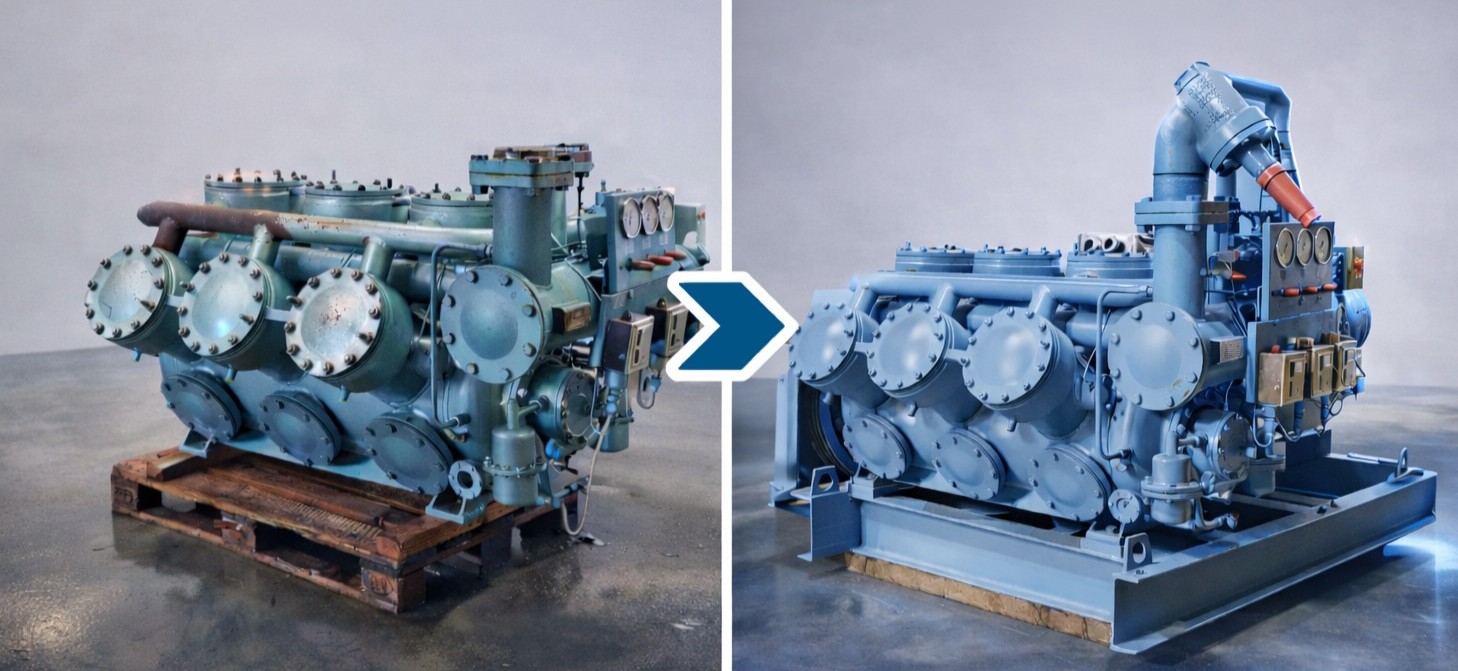
In many cases, existing equipment that has been properly refurbished can remain technically reliable for years to come.
A professionally refurbished machine:
- significantly extends its service life
- prevents unnecessary waste of materials
- often offers a favorable cost–benefit ratio
In this context, sustainability does not mean outdated technology, but making thoughtful use of what is already available.
Reuse as a practical form of circularity
The Netherlands has set the ambition to become fully circular by 2050. Within refrigeration technology, this mainly means making conscious choices and optimizing the use of existing resources.
Reuse within the refrigeration industry is not a theoretical concept, but an everyday practice. When carried out correctly, it can be a practical and effective alternative to new equipment.
At HOS BV, we offer a wide range of used refrigeration systems that are carefully tested and reconditioned to ensure full operational reliability. This makes us an excellent partner for companies seeking sustainable, cost-effective solutions without compromising on quality.
From sustainability goals to technical decisions
Reducing emissions in refrigeration is not only about setting targets. It requires clear technical decisions. The choice of refrigerant, the condition of existing equipment, and the decision to refurbish or replace a system all directly affect environmental performance.
By carrying out realistic system evaluations and using proven technology, companies can reduce emissions without adding technical risk or operational complexity. In many cases, extending the service life of current installations provides immediate environmental benefits compared to installing newly manufactured systems.
Sustainability across the entire lifecycle
True sustainability in refrigeration technology must be assessed across the full lifecycle of an installation. This includes not only operational efficiency, but also the emissions profile of manufacturing, transport, and eventual dismantling.
Refurbished refrigeration equipment often performs reliably for many years, while avoiding the emissions associated with new production. For system owners and installers, looking at the full lifecycle helps them balance performance, cost, and environmental impact.
HOS BV: supporting informed technical choices
At HOS BV, our role is to support customers with practical, experience-based insight into refrigeration equipment and systems. Whether the goal is to extend the life of an existing installation or to select an alternative system that better fits future requirements, we help customers make decisions that are technically sound, economically realistic, and aligned with long-term sustainability objectives.
Latest articles
Meld u aan voor onze nieuwsbrief
Blijf op de hoogte van nieuwe productaanbiedingen en ontwikkelingen in de branche
Klantervaring
 Horst Schindler
Schindler Consulting